
A profitable flip begins long before the first wall is opened or the first coat of paint goes on. It starts when you walk through a property and notice what other buyers miss: a stain near the baseboard, a soft spot in the floor, a window that will not close cleanly, or a musty smell near the utility room.
Newer investors often focus on finishes, but paint, flooring, and fixtures are rarely what destroy the budget. The biggest threats are hidden behind walls, under floors, above ceilings, or outside where water has been causing damage for years.
Before buying your next flip, your job is not just to decide whether the property can look good. Your job is to decide whether the numbers still work after the expensive problems are addressed. That means slowing down, asking better questions, and treating the walkthrough like a risk assessment instead of a shopping trip.
Checking Major Systems Before You Bid

The mechanical systems in a house can quietly decide whether a flip is profitable. A home may look dated but manageable, only to reveal that the heating and cooling equipment is near the end of its life. Unlike cosmetic updates, these systems are not easy to hide. Buyers notice comfort issues, and inspectors almost always comment on age, condition, and performance.
Start by checking the basics. Look at the age of the unit, visible rust, missing service labels, weak airflow, loud startup sounds, or rooms that feel noticeably warmer or cooler than others. If the seller says, “It works fine,” do not treat that as enough. A system can technically run and still be close to failure.
This is where experienced ac contractors can help you avoid guessing. A quick professional opinion before closing may reveal whether the system needs a minor tune-up, a major repair, or full replacement. That difference can change your offer quickly.
A residential hvac service inspection can also help you understand equipment age, ductwork condition, thermostat function, and safety concerns. If replacement is likely, price it before you bid instead of hoping you can absorb it later.
Pay attention to how the system fits the expectations of the neighborhood, too. In a lower-priced starter home, buyers may accept an older system if the house is otherwise sound and priced fairly. In a more competitive resale market, an aging system can become a sticking point during negotiations. If nearby renovated homes advertise updated mechanicals, your finished property may feel less complete without them.
It also helps to ask whether the system affects your renovation timeline. Replacing equipment may require scheduling, permits, duct adjustments, or electrical work. If you discover the need after flooring, paint, or drywall repairs are complete, the process may become more disruptive than expected.
Tracing Water Problems Before They Spread
Water is one of the most expensive forces in a flip because it rarely stays in one place. A small drainage issue can become a foundation issue. A clogged roofline can become rotten fascia, damaged siding, or moisture inside the walls.
Start outside. Walk the perimeter slowly. Look for low spots near the foundation, soil erosion, stains on siding, splash marks near the base of the house, and downspouts that dump water too close to the structure. Inside, watch for musty smells, bubbling paint, stained drywall, warped flooring, or basement moisture.
If the property uses a private waste system, ask about age, maintenance, and service history. Regular septic system cleaning can be a clue that the home has been maintained responsibly. If records are missing, pay attention to slow drains, gurgling fixtures, sewage odors, unusually lush grass near the drain field, or wet areas in the yard.
Roofline drainage matters, too. Poor gutter installation can send water near the foundation, behind fascia, or into landscaping beds where it creates erosion. Check whether gutters are sloped correctly, downspouts are connected, and water appears to be overflowing or backing up.
Do not evaluate water issues only on a sunny day. If possible, visit after rain or ask your inspector to look closely for drainage patterns. Even if you cannot see active water, the property may leave clues behind. A line of dirt on the foundation, mulch washed away from one corner, or patched drywall in a basement can tell you where water has been traveling.
A flip can still work with water-related repairs, but the risk needs to be priced honestly. Moisture often creates secondary problems, including mold, damaged insulation, swollen trim, warped flooring, and hidden framing issues. When several signs appear together, assume the repair may be larger than what is visible.
Reading Exterior Clues Before You Commit
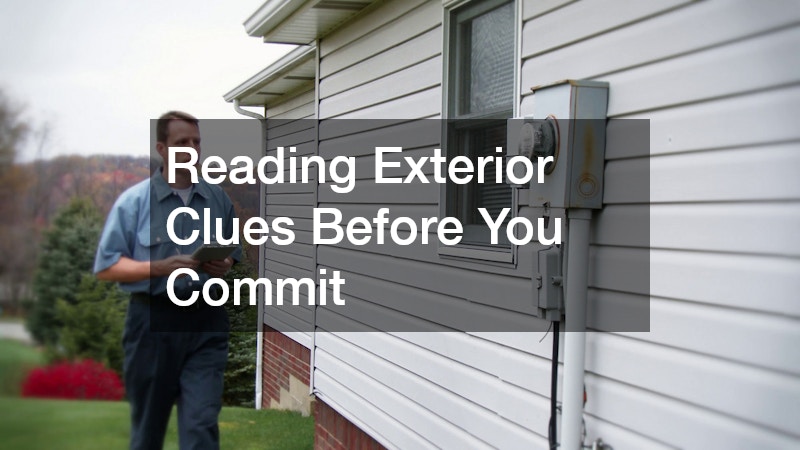
Exterior problems can be tricky because some are cosmetic, while others affect the structure, timeline, and resale confidence. A faded front door is simple. Rotten trim, damaged flashing, or a sagging roofline is a different conversation.
Before going inside, pause at the curb. Look at the roofline, siding, windows, porch, grading, and overall maintenance. Instead of asking, “What would make this look nice?” ask, “What would a buyer’s inspector flag?”
Watch for warning signs such as:
- Wavy or uneven roof planes
- Missing, curled, or worn shingles
- Damaged flashing
- Soft or rotted fascia and soffits
- Cracks near windows, doors, or foundation areas
- Water stains below roof edges
- Gaps where siding meets trim
If you see several signs at once, bring in a roofing company before relying on rough assumptions. The roof is one of the most visible and inspection-sensitive parts of a flip.
The challenge is knowing whether the property needs limited roof repairs or a larger fix. Minor flashing work or a few damaged shingles may be manageable. Widespread wear, repeated leaks, or soft decking can affect insulation, ceilings, framing, electrical components, and interior finishes.
Exterior conditions also shape buyer confidence. A buyer may not understand every technical detail, but they can sense neglect. Peeling trim, stained siding, damaged roof edges, and poor drainage create doubt before they even step inside. When the outside looks poorly maintained, buyers often assume the hidden parts of the house have been neglected too.
That does not mean every exterior flaw should scare you away. It means you should understand whether the exterior needs a simple refresh or a more serious repair plan. Cosmetic curb appeal can be improved quickly. Structural or moisture-related exterior issues need more time, money, and coordination.
Measuring Project Scope Before You Plan
A common flipping mistake is deciding what the property “should be” before fully understanding what it already is. You may picture an open layout, brighter finishes, new flooring, and a dramatic exterior refresh. That vision can be useful, but it can also make you underestimate the scope.
Separate the project into three layers: safety, function, and appeal. Safety includes structural concerns, electrical hazards, moisture issues, and anything that could affect insurance or resale. Function includes systems, layout, lighting, plumbing, and daily usability. Appeal includes the finishes and design choices that help the home sell.
Problems happen when investors start with appeal and work backward. A house may need roof installation before any interior upgrades make sense. If the roof is beyond repair, that cost changes the project immediately.
An experienced home renovation company can help determine whether the property is a cosmetic flip, a moderate renovation, or a heavy rehab. Most houses can be fixed with enough money, but the real question is whether the property can be fixed within the budget, timeline, and resale value that make the investment worthwhile.
One helpful exercise is to imagine the order of work before you buy. If the project starts with major unknowns, such as stopping leaks, correcting structural concerns, or replacing failing systems, your schedule may be less predictable. If the first few weeks can be planned clearly, the project may be easier to control.
Scope also affects holding costs. A renovation that takes three months instead of six weeks may require additional loan payments, utilities, insurance, taxes, and maintenance. These costs are easy to overlook when you are focused on repair estimates, but they reduce profit just as much as materials and labor.
Testing Interior Plans Before You Budget

Interior updates are where many flippers expect to create value, but kitchens and bathrooms can hide costly surprises. Do not begin by choosing finishes. Begin by testing whether the existing layout, structure, and utilities can support your plan.
In the kitchen, look under sinks, around appliances, along cabinet bases, and near exterior walls. Staining, soft flooring, swollen cabinet panels, and musty smells can point to leaks or long-term moisture exposure.
Countertop installation sounds like a finish decision, but it depends on what is underneath. If cabinets are damaged, uneven, or poorly installed, new counters may require cabinet replacement, plumbing adjustments, electrical updates, or flooring repairs first.
Bathrooms deserve even more caution because water and poor ventilation can damage areas you cannot see during a quick tour. Step around the toilet, tub, and vanity to feel for soft flooring. Look for cracked grout, loose tile, peeling paint, swollen trim, and staining on nearby walls or ceilings.
Bathroom remodeling can become expensive when moisture has been ignored for years. Subfloor replacement, plumbing corrections, waterproofing, ventilation, and wall repair may all be necessary before visible finishes go in.
Think carefully before assuming every room needs a full redesign. Sometimes the best investment is a targeted improvement that solves the buyer’s main concerns without overbuilding for the neighborhood. In another property, a deeper renovation may be necessary because the layout, plumbing, or existing materials are too far behind buyer expectations.
A practical walkthrough should include both condition and resale thinking. Ask whether the kitchen layout feels functional, whether the bathroom count fits the market, and whether the planned updates will match comparable renovated homes. The right interior plan should improve appeal without ignoring what the property is physically capable of supporting.
Pricing Repairs Before You Make the Offer
Once you have walked the property, turn observations into numbers. A property can feel promising emotionally and still fail financially once the repair budget is honest.
Break the work into categories:
- Must-fix items: Safety concerns, structural issues, active leaks, major system problems, and anything likely to affect financing, insurance, or resale.
- Should-fix items: Repairs that improve function, buyer confidence, and inspection outcomes.
- Value-add items: Updates that improve marketability, comfort, and perceived quality.
- Optional upgrades: Improvements that only make sense if the budget and resale price support them.
Sequencing matters. Do not repair a damaged ceiling before fixing the leak above it. Do not install new flooring over a soft subfloor. Do not use fresh paint to hide moisture. Buyers may not notice shortcuts during a showing, but inspectors often find the symptoms later.
Add a contingency line before deciding your offer price. Older homes often reveal surprises after demolition, and those surprises are only manageable if your budget expects some uncertainty.
Your offer should reflect the risk you are taking. If the seller wants a price based on potential, but you are responsible for making that potential real, the numbers need to leave room for both repairs and profit. A deal that only works under perfect conditions is usually too thin.
It can help to create two versions of your budget: the expected version and the uncomfortable version. The expected version includes the repairs you can see clearly. The uncomfortable version includes the problems that might reasonably appear once work begins. If the deal still works under the uncomfortable version, it may be worth serious consideration.
Walking Away Before the Numbers Break

There is a moment in many property tours when an investor knows the house is more complicated than expected but keeps trying to make the deal work anyway. Maybe the location is strong. Maybe the finished version would be impressive. But forcing a bad flip rarely leads to a better outcome.
Be careful when major problems stack across several categories. One large issue may be manageable. Several large issues can consume the budget before you ever reach the improvements that create resale appeal.
Before moving forward, ask yourself:
- What is the worst realistic repair scenario?
- How much cash will be tied up before the home is market-ready?
- What delays could affect holding costs?
- Are comparable sales strong enough to support the renovation?
- Do I have reliable people available for the work this property needs?
Walking away can feel like losing an opportunity, but it is often how experienced investors protect their capital. Passing on a property with unclear risk leaves you ready for a better deal.
The goal is not to avoid every difficult property. Some profitable flips come from solving problems that scare away casual buyers. The key is knowing which problems you can price accurately and which ones keep expanding as you investigate. If every answer creates two new questions, the property may require more risk tolerance than the deal supports.
Buying With the Exit Strategy in Mind
A successful flip is not just a renovation project. It is a purchase, a repair plan, a resale strategy, and a risk calculation tied together. Before you buy, you need to understand what the property requires, what the market will reward, and where hidden costs may appear.
The more carefully you inspect before making an offer, the less likely you are to be surprised after closing. Look beyond surface-level wear. Pay attention to systems, water movement, exterior condition, interior warning signs, project scope, and repair sequencing.
Most importantly, do not let excitement replace discipline. A property can have potential and still be the wrong deal. The right flip has problems you can identify, costs you can estimate, risks you can manage, and a clear path to resale profit.
When you buy with the exit strategy in mind, every repair decision becomes more focused. You are not just fixing a house; you are preparing a product for a specific buyer in a specific market. That perspective helps you avoid over-improving, under-repairing, or ignoring problems that could return during inspection. In the end, the best flip is not always the most dramatic transformation. It is the one where the numbers, repairs, and resale plan all work together.